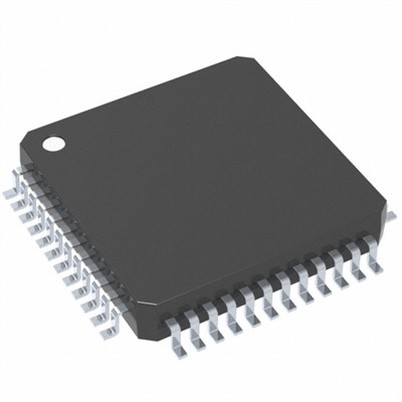

Can an IC Line Driver be used in a power - line communication system?
Leave a message

In the realm of modern communication systems, power-line communication (PLC) has emerged as a fascinating and promising technology. It leverages existing electrical power lines to transmit data, offering a cost - effective and convenient solution for various applications, from home automation to industrial monitoring. As an IC Line Driver supplier, I am often asked whether an IC Line Driver can be used in a power - line communication system. In this blog post, we will explore this question in depth, delving into the technical aspects, advantages, and potential challenges.
Understanding Power - Line Communication Systems
Power - line communication systems operate by superimposing high - frequency data signals onto the existing power - line infrastructure. These signals can carry a wide range of information, such as control commands, sensor readings, and multimedia content. The power lines serve as the medium for data transmission, eliminating the need for separate communication cables in many cases.
There are two main types of PLC: narrow - band PLC and broadband PLC. Narrow - band PLC typically operates in the frequency range of a few kilohertz to a few hundred kilohertz and is commonly used for applications like smart metering and street lighting control. Broadband PLC, on the other hand, operates at much higher frequencies (up to several hundred megahertz) and is suitable for high - speed data transfer, such as home networking.
What is an IC Line Driver?
An IC Line Driver is an integrated circuit designed to drive signals over a transmission line. It amplifies the input signal to a level suitable for transmission and provides impedance matching to minimize signal reflections. IC Line Drivers come in various types, including voltage - mode drivers and current - mode drivers, each with its own characteristics and applications.
The primary function of an IC Line Driver is to boost the signal strength and ensure that it can travel a sufficient distance over the transmission line without significant degradation. They are commonly used in audio systems, video distribution, and telecommunications to improve the quality and reliability of signal transmission.
Feasibility of Using an IC Line Driver in a Power - Line Communication System
Signal Amplification
One of the key requirements in a power - line communication system is to amplify the data signal to a level that can overcome the attenuation and noise present on the power lines. An IC Line Driver can be an effective solution for this purpose. It can take the low - level data signal from the communication module and amplify it to a higher voltage or current level, increasing its transmission range.
For example, in a narrow - band PLC system, the signal may need to travel several hundred meters over the power lines. An IC Line Driver can provide the necessary gain to ensure that the signal remains detectable at the receiving end. Similarly, in a broadband PLC system, where high - speed data transfer is required, an IC Line Driver can help maintain the signal integrity over longer distances.
Impedance Matching
Power lines have a complex impedance characteristic that can vary depending on the length, load, and frequency of the signal. Impedance mismatches between the communication module and the power line can lead to signal reflections, which can degrade the signal quality and reduce the communication efficiency.
An IC Line Driver can be designed to provide impedance matching between the communication module and the power line. By adjusting the output impedance of the driver to match the characteristic impedance of the power line, the signal reflections can be minimized, resulting in a more reliable communication link.
Noise Immunity
Power lines are a noisy environment, with various sources of interference, such as electrical appliances, motors, and lightning. An IC Line Driver can incorporate features to improve the noise immunity of the data signal. For instance, some drivers use differential signaling, where the signal is transmitted as the difference between two complementary signals. This technique can effectively reject common - mode noise, which is the noise that appears equally on both signals.
Advantages of Using an IC Line Driver in a Power - Line Communication System
Cost - Effectiveness
Compared to dedicated power - line communication transceivers, an IC Line Driver can be a more cost - effective solution in some cases. Since it is a general - purpose component, it can be used in multiple applications, reducing the overall system cost. Additionally, the existing power - line infrastructure can be utilized, eliminating the need for laying additional communication cables.
Flexibility
IC Line Drivers offer a high degree of flexibility in terms of signal amplification and impedance matching. They can be easily configured to meet the specific requirements of different power - line communication systems. For example, the gain and output impedance of the driver can be adjusted through external components or control signals, allowing for customization based on the system design.
Compatibility
Many IC Line Drivers are designed to be compatible with a wide range of input and output interfaces. This means that they can be easily integrated into existing power - line communication systems without significant modifications. They can work with different types of communication protocols, such as Ethernet, RS - 485, and CAN, providing a seamless connection between the communication module and the power line.
Challenges and Limitations
Power Line Characteristics
Power lines are not an ideal transmission medium. They have a non - uniform impedance, high attenuation, and a wide range of noise sources. These characteristics can pose challenges for an IC Line Driver. For example, the high attenuation at high frequencies in broadband PLC systems may require a very high gain from the driver, which can increase the power consumption and introduce additional noise.
Regulatory Requirements
Power - line communication systems are subject to various regulatory requirements, especially in terms of electromagnetic interference (EMI). An IC Line Driver used in a PLC system must comply with these regulations to avoid causing interference to other electrical devices. This may require additional filtering and shielding techniques, which can increase the complexity and cost of the system.
Temperature and Environmental Conditions
Power - line communication systems are often installed in harsh environments, where the temperature, humidity, and vibration can vary significantly. An IC Line Driver must be able to operate reliably under these conditions. Some drivers may require additional thermal management or protection circuits to ensure their long - term stability.
Case Study: Using LM3886TF in a Power - Line Communication System
The LM3886TF is a high - performance audio power amplifier IC that can also be used in a power - line communication system. It has a high output power capability and excellent linearity, making it suitable for signal amplification in PLC applications.
In a narrow - band PLC system, the LM3886TF can be used to amplify the low - level data signal from the communication module. By adjusting the gain of the amplifier, the signal can be boosted to a level that can travel a sufficient distance over the power lines. The high linearity of the LM3886TF ensures that the data signal is not distorted during the amplification process, maintaining the integrity of the communication.
Conclusion
In conclusion, an IC Line Driver can be used in a power - line communication system, offering several advantages in terms of signal amplification, impedance matching, and noise immunity. However, it also faces challenges due to the unique characteristics of power lines, regulatory requirements, and environmental conditions.


As an IC Line Driver supplier, we are committed to providing high - quality products that can meet the specific needs of power - line communication systems. Our IC Line Drivers are designed with advanced features to overcome the challenges and ensure reliable communication.
If you are interested in using an IC Line Driver in your power - line communication system, we invite you to contact us for more information and to discuss your specific requirements. Our team of experts is ready to assist you in finding the best solution for your application.
References
- "Power Line Communication Technology: Principles, Standards, and Applications" by Zoran Zivkovic.
- "Integrated Circuit Design for Power - Line Communication" by Paolo Maggiore.
- "Operational Amplifiers and Linear Integrated Circuits" by Robert F. Coughlin and Frederick F. Driscoll. For more information on Operational Amplifier Ics, you can visit the provided link.