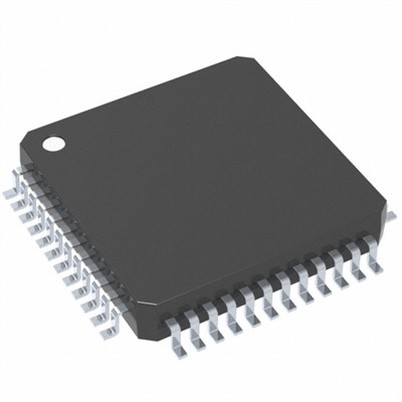

What is the difference between 74hc595d 118 and other similar chips?
Leave a message

As a supplier of the 74HC595D 118, I've had numerous customers inquire about the distinctions between this chip and its counterparts. In this blog, I'll delve into the key differences, providing a comprehensive analysis to help you understand why the 74HC595D 118 might be the ideal choice for your project.
Understanding the Basics of 74HC595D 118
The 74HC595D 118 is a high - speed silicon - gate CMOS device that emulates the low - power Schottky TTL (LSTTL) series. It is an 8 - bit serial - in, parallel - out shift register with a storage register and 3 - state output drivers. This means that it can take in data serially (one bit at a time) and then output it in parallel (all 8 bits at once), which is incredibly useful in various digital applications.
One of the primary advantages of the 74HC595D 118 is its ability to expand the number of output pins of a microcontroller. For instance, if you have a microcontroller with limited output pins, you can use the 74HC595D 118 to add more output channels without having to replace the entire microcontroller.
Comparing with Other Similar Chips
Pin Configuration and Compatibility
Many similar chips have different pin configurations. Some may have a different number of pins or a different arrangement of input and output pins. The 74HC595D 118 has a standard 16 - pin configuration, which is well - documented and widely supported in the electronics community. This standardization makes it easier to integrate into existing circuits and design new ones.


In contrast, some other chips might have non - standard pinouts, which can lead to difficulties in circuit design and debugging. For example, when using a chip with a non - standard pin configuration, you may need to create custom PCB layouts or use additional wiring to connect it to other components, increasing the complexity and cost of the project.
Shift Register and Storage Register Functionality
The 74HC595D 118 features both a shift register and a storage register. The shift register is used to receive the serial data, while the storage register holds the data until it is ready to be output. This two - stage process allows for more precise control over the data transfer.
Some similar chips may only have a single register, which can limit their functionality. Without a separate storage register, the data is directly output as soon as it is received in the shift register, which may not be suitable for applications where you need to hold the data for a certain period or update all the outputs simultaneously.
Output Drive Capability
The output drivers of the 74HC595D 118 are designed to provide sufficient current to drive external loads. It can typically drive LEDs, small relays, or other low - power devices without the need for additional buffer circuits.
However, some other chips may have lower output drive capabilities. This means that if you want to drive larger loads, you may need to add external buffer amplifiers, which adds to the cost and complexity of the circuit. For example, if you are using a chip with low output drive to power a bank of LEDs, the LEDs may not shine as brightly as expected, or they may flicker due to insufficient current.
Speed and Performance
The 74HC595D 118 is a high - speed device, capable of operating at clock frequencies up to several megahertz. This high - speed operation makes it suitable for applications that require fast data transfer, such as real - time data processing or high - speed communication systems.
In comparison, some other similar chips may have lower operating speeds. If you are working on a project that demands high - speed data transfer, using a slower chip can result in data bottlenecks and reduced overall system performance.
Applications and Use Cases
LED Matrix Displays
The 74HC595D 118 is commonly used in LED matrix displays. Its ability to expand the output pins of a microcontroller and control multiple LEDs efficiently makes it an ideal choice. By using multiple 74HC595D 118 chips, you can easily control large - scale LED matrix displays.
In contrast, some other chips may not be as well - suited for this application. For example, chips with limited output drive capability may not be able to provide enough current to light up all the LEDs in the matrix, resulting in dim or unevenly lit displays.
Robotics and Automation
In robotics and automation, the 74HC595D 118 can be used to control various actuators and sensors. Its high - speed operation and precise data transfer capabilities are crucial for real - time control of robotic movements.
Other chips may lack the necessary speed or functionality for these applications. For instance, a slow - speed chip may not be able to respond quickly enough to sensor inputs, leading to inaccurate robotic movements.
Related Products in the Market
There are several related products in the market that you might also consider. For example, the IC Line Driver is a useful component in audio applications. It can be used to amplify and condition audio signals, providing a clean and strong output.
Another product is the TAS5707PHPR, which is a high - performance audio amplifier. It offers high - quality sound output and is suitable for various audio systems, such as home theaters and car audio systems.
The OPA2277UA is an operational amplifier known for its low noise and high precision. It can be used in a wide range of applications, including audio processing, instrumentation, and control systems.
Why Choose the 74HC595D 118 from Our Supply
As a supplier of the 74HC595D 118, we ensure the quality and reliability of our products. Our chips are sourced from reputable manufacturers and undergo strict quality control processes. We also offer competitive pricing and excellent customer service.
If you are looking for a high - quality 74HC595D 118 for your project, we invite you to contact us for procurement and negotiation. We are committed to providing you with the best solutions to meet your specific needs.
References
- "CMOS Logic Data Book" by Texas Instruments
- "Digital Electronics: Principles and Applications" by Thomas L. Floyd