

What is the transient response of a DPST SSR?
Leave a message

Yo, what's up everyone! As a supplier of DPST SSRs (Double Pole, Single Throw Solid State Relays), I've been getting a lot of questions lately about the transient response of these bad boys. So, I thought I'd take some time to break it down for you all.
Let's start with the basics. A DPST SSR is an electronic switch that uses semiconductor devices to control the flow of electrical current. Unlike traditional electromechanical relays, which use moving parts to open and close circuits, SSRs offer a faster, more reliable, and quieter alternative. They're commonly used in a wide range of applications, from industrial automation to home appliances.
Now, the transient response of a DPST SSR refers to how it behaves when there's a sudden change in the input signal. This could be a step change in voltage or current, or a short - duration pulse. Understanding the transient response is crucial because it can affect the overall performance and reliability of the system in which the SSR is used.
One of the key aspects of the transient response is the turn - on and turn - off time. When you apply an input signal to turn on the SSR, there's a small delay before the output fully conducts. This is called the turn - on time. Similarly, when you remove the input signal to turn off the SSR, there's a delay before the output stops conducting, which is the turn - off time.

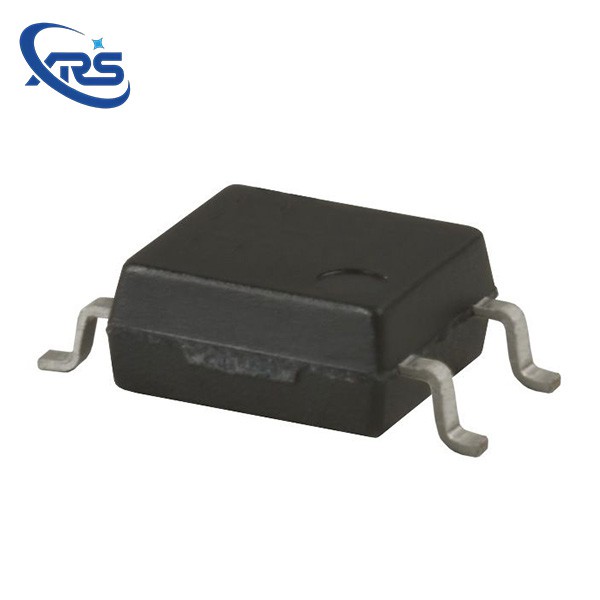
These times are typically in the range of milliseconds, but they can vary depending on the specific model of the SSR. For example, our CPC1030NTR has a very fast turn - on and turn - off time, making it ideal for applications where quick switching is required.
Another important factor in the transient response is the overshoot and undershoot. When the SSR turns on or off, there can be a temporary deviation in the output voltage or current from the steady - state value. This is known as overshoot (when the value goes above the steady - state) or undershoot (when it goes below).
Overshoot and undershoot can cause problems in some applications. For instance, in a sensitive electronic circuit, an overshoot in voltage could damage components. That's why it's important to choose an SSR with low overshoot and undershoot characteristics. Our CPC1002N is designed to minimize these issues, providing a more stable output during transient events.
The transient response can also be affected by the load connected to the SSR. Different types of loads, such as resistive, inductive, or capacitive, can have different impacts on the SSR's performance.
Resistive loads are the simplest. They don't store energy, so the transient response is relatively straightforward. When you turn on or off an SSR with a resistive load, the current and voltage change in a relatively predictable way.
Inductive loads, on the other hand, are a bit more complicated. Inductors store energy in a magnetic field, and when the SSR turns off, this stored energy needs to be dissipated. This can cause a high - voltage spike, which can potentially damage the SSR. To deal with this, we often recommend using a snubber circuit in parallel with the load.
Capacitive loads can also pose challenges. When the SSR turns on, the capacitor charges rapidly, which can cause a high inrush current. This inrush current can be much higher than the steady - state current, and it can stress the SSR. So, it's important to choose an SSR that can handle the inrush current of the capacitive load.
Comparing DPST SSRs with other types of relays, like the SPST Reed Relay, the transient response of DPST SSRs is generally faster. Reed relays have mechanical contacts that need time to move, which results in longer turn - on and turn - off times compared to SSRs.
In addition, SSRs don't have the wear and tear issues associated with the mechanical contacts of reed relays. This means that the transient response of SSRs remains more consistent over time, providing a more reliable performance in the long run.
So, why should you choose our DPST SSRs? Well, we've spent years perfecting our designs to ensure that our SSRs have excellent transient response characteristics. Whether you need a fast - switching SSR for a high - speed application or one with low overshoot for a sensitive circuit, we've got you covered.
Our team of experts is always available to help you choose the right SSR for your specific needs. We can provide detailed technical specifications and advice on how to optimize the performance of the SSR in your system.
If you're in the market for DPST SSRs and want to learn more about our products, or if you have any questions about the transient response or any other aspect of SSRs, don't hesitate to reach out. We're here to make the process of choosing and using our SSRs as easy as possible for you.
Let's work together to find the perfect solution for your application. Whether you're a small - scale hobbyist or a large - scale industrial manufacturer, we have the right DPST SSR for you. So, get in touch and let's start this journey together!
References
- Solid - State Relay Handbook
- Application Notes on Transient Response of Electronic Switches


