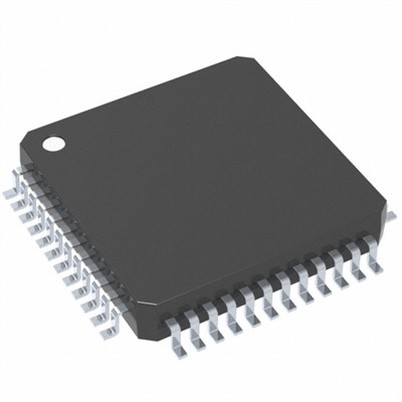

What are the clock synchronization algorithms for a Timing IC?
Leave a message

As a supplier of Timing ICs, I've witnessed firsthand the critical role these components play in countless electronic systems. Clock synchronization is a fundamental aspect of Timing IC functionality, ensuring that various parts of a system operate in harmony. In this blog, I'll delve into the key clock synchronization algorithms used in Timing ICs, exploring their principles, applications, and advantages.
1. The Importance of Clock Synchronization in Timing ICs
Before we dive into the algorithms, it's essential to understand why clock synchronization is so crucial. In modern electronic systems, multiple components often need to work together precisely. For example, in a data center, servers, storage devices, and networking equipment must synchronize their clocks to ensure accurate data transfer and processing. A Timing IC acts as the heart of these systems, providing stable and synchronized clock signals. Without proper synchronization, data errors, communication failures, and system malfunctions can occur.
2. Phase - Locked Loop (PLL) Algorithm
The Phase - Locked Loop is one of the most widely used clock synchronization algorithms in Timing ICs. A PLL consists of three main components: a phase detector, a loop filter, and a voltage - controlled oscillator (VCO).
The phase detector compares the phase of the input reference clock signal with the phase of the output clock signal from the VCO. It generates an error signal proportional to the phase difference between the two signals. The loop filter then smoothes this error signal, removing high - frequency noise. Finally, the filtered error signal is used to control the frequency of the VCO. As the VCO frequency changes, the phase of its output signal also changes, and the process continues until the phase difference between the input reference clock and the VCO output clock is minimized.
PLLs are used in a wide range of applications, such as Clock Oscillator. They can generate high - frequency clock signals from a low - frequency reference clock, making them ideal for applications where a stable and adjustable clock source is required. The advantages of PLLs include fast locking times, high frequency stability, and the ability to generate multiple output frequencies.
3. Delay - Locked Loop (DLL) Algorithm
The Delay - Locked Loop is another important clock synchronization algorithm. Similar to a PLL, a DLL is used to synchronize the phase of a clock signal. However, instead of controlling the frequency of an oscillator, a DLL controls the delay of a clock signal.
A DLL typically consists of a delay line, a phase detector, and a control circuit. The phase detector compares the phase of the input reference clock with the phase of the output clock after passing through the delay line. The control circuit adjusts the delay of the delay line based on the phase difference detected by the phase detector.
DLLs are commonly used in applications where precise phase alignment is required, such as in Clock Buffer IC. They can compensate for propagation delays in clock distribution networks, ensuring that all components in a system receive the clock signal at the same time. DLLs offer advantages such as low jitter and high phase accuracy.
4. Network Time Protocol (NTP) and Precision Time Protocol (PTP) for Timing ICs in Networked Systems
In networked systems, Timing ICs often need to synchronize their clocks with other devices across the network. The Network Time Protocol (NTP) and Precision Time Protocol (PTP) are two widely used protocols for this purpose.
NTP is a networking protocol used to synchronize the clocks of computers over a network. It uses a hierarchical system of time servers, with the most accurate time sources at the top of the hierarchy. NTP clients communicate with these time servers to adjust their clocks. While NTP can achieve synchronization accuracy in the order of milliseconds, it may not be sufficient for applications that require higher precision.
PTP, on the other hand, is designed for applications that require sub - microsecond synchronization accuracy. It uses a master - slave architecture, where a master clock distributes the time information to slave clocks. PTP uses hardware - assisted timestamping to measure the propagation delays between the master and slave clocks accurately.
Timing ICs in networked systems can implement NTP or PTP to ensure that all devices in the network have synchronized clocks. This is particularly important in applications such as financial trading systems, industrial automation, and telecommunications, where accurate timekeeping is crucial for proper operation.
5. Real - Time Clock (RTC) Synchronization
Real Time Clock IC is a type of Timing IC that keeps track of the current time. RTCs are often used in applications where continuous timekeeping is required, even when the main power is off.
To ensure the accuracy of the RTC, it may need to be synchronized periodically. This can be done using an external reference clock source, such as a GPS - based time signal or a network - based time protocol. For example, an RTC can be synchronized with a PTP - compliant network to maintain high - precision timekeeping.
The synchronization process typically involves comparing the time stored in the RTC with the time from the reference source. If there is a difference, the RTC is adjusted accordingly. This ensures that the RTC provides accurate time information over an extended period.
6. Conclusion and Call to Action
In conclusion, clock synchronization algorithms are essential for the proper functioning of Timing ICs. Whether it's a simple PLL for generating a stable clock signal or a complex PTP implementation for network - wide synchronization, these algorithms enable electronic systems to operate with precision and reliability.
As a Timing IC supplier, we offer a wide range of products that incorporate these advanced clock synchronization algorithms. Our Timing ICs are designed to meet the diverse needs of various industries, from consumer electronics to high - end telecommunications.
If you're in the market for high - quality Timing ICs or have any questions about clock synchronization, we'd love to hear from you. Please reach out to us to discuss your specific requirements and explore how our products can benefit your projects.


References
- "Phase - Locked Loops: Design, Simulation, and Applications" by Roland E. Best
- "Digital Communications" by John G. Proakis
- "Network Time Protocol (NTP) Specification, Implementation, and Analysis" by David L. Mills