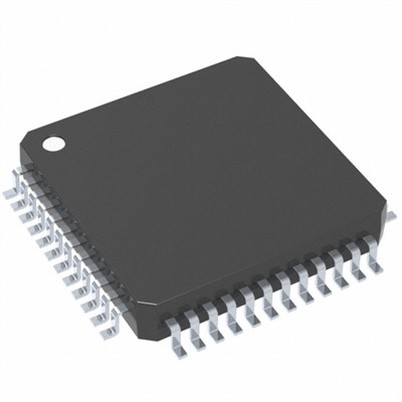

How to use LM358AD in a summing amplifier circuit?
Leave a message

Hey there, fellow electronics enthusiasts! As a supplier of the LM358AD, I'm stoked to share with you how to use this nifty little op-amp in a summing amplifier circuit. The LM358AD is a dual operational amplifier that's widely used in various applications due to its low power consumption, wide supply voltage range, and high gain.
What's a Summing Amplifier Circuit?
Before we dive into using the LM358AD in a summing amplifier circuit, let's quickly go over what a summing amplifier is. A summing amplifier is a type of operational amplifier circuit that combines multiple input signals into a single output signal. The output voltage of a summing amplifier is proportional to the sum of the input voltages, with each input having its own gain factor.
Why Use the LM358AD in a Summing Amplifier Circuit?
The LM358AD is an excellent choice for a summing amplifier circuit for several reasons. First, it has a high gain bandwidth product, which means it can handle high-frequency signals without significant distortion. Second, it has a low input offset voltage, which reduces the error in the output signal. Third, it operates over a wide supply voltage range, from 3V to 32V, making it suitable for a variety of applications.
Components You'll Need
To build a summing amplifier circuit using the LM358AD, you'll need the following components:
- LM358AD: The star of the show! This dual operational amplifier will do the heavy lifting in our circuit.
- Resistors: You'll need several resistors to set the gain of each input and the overall gain of the circuit. The values of these resistors will depend on your specific application.
- Capacitors: Capacitors are used to filter out any unwanted noise or interference in the circuit. You'll typically need a few small ceramic capacitors.
- Power Supply: The LM358AD can operate on a wide range of power supplies, but you'll need to provide a stable voltage source. You can use a battery or a regulated power supply.
Building the Summing Amplifier Circuit
Now, let's get down to business and build the summing amplifier circuit using the LM358AD. Here's a step-by-step guide:
- Schematic Design: First, draw the schematic diagram of the summing amplifier circuit. You can use a software tool like Eagle or KiCad to design the schematic. The basic circuit consists of the LM358AD, resistors, and capacitors connected in a specific configuration.
- Component Placement: Once you have the schematic, it's time to place the components on a printed circuit board (PCB). Make sure to follow the layout guidelines and keep the traces as short as possible to minimize noise and interference.
- Soldering: After placing the components on the PCB, it's time to solder them in place. Use a soldering iron and solder to connect the components according to the schematic. Make sure to use the correct soldering technique and avoid creating any short circuits.
- Testing: Once you've soldered all the components, it's time to test the circuit. Connect the power supply and apply some input signals to the circuit. Use an oscilloscope or a multimeter to measure the output voltage and make sure it's proportional to the sum of the input voltages.
Calculating the Gain
The gain of a summing amplifier circuit is determined by the values of the resistors used in the circuit. The formula for calculating the gain of a summing amplifier is:
[V_{out} = -(\frac{R_f}{R_1}V_1 + \frac{R_f}{R_2}V_2 + \frac{R_f}{R_3}V_3 + ...)]
Where:
- (V_{out}) is the output voltage of the circuit.
- (R_f) is the feedback resistor.
- (R_1, R_2, R_3, ...) are the input resistors.
- (V_1, V_2, V_3, ...) are the input voltages.
By choosing the appropriate values for the resistors, you can set the gain of each input and the overall gain of the circuit.
Applications of the LM358AD in Summing Amplifier Circuits
The LM358AD can be used in a wide variety of applications in summing amplifier circuits. Here are some examples:
- Audio Mixing: In audio mixing applications, the LM358AD can be used to combine multiple audio signals into a single output signal. This is commonly used in audio mixers, amplifiers, and sound systems.
- Signal Processing: The LM358AD can also be used in signal processing applications to combine multiple input signals and perform mathematical operations on them. This is commonly used in filters, amplifiers, and oscillators.
- Instrumentation: In instrumentation applications, the LM358AD can be used to measure and amplify small signals from sensors and transducers. This is commonly used in medical devices, industrial control systems, and scientific instruments.
Other Related ICs
If you're interested in other audio-related ICs, check out the LM3886TF and the TAS5707PHPR. These ICs are great for audio amplification and processing. Also, if you need a Volume Control IC, we've got you covered.
Contact Us for Purchasing
If you're looking to purchase the LM358AD or any other electronic components, we're here to help. We offer high-quality products at competitive prices, and our team of experts is always available to answer any questions you may have. Whether you're a hobbyist, a professional engineer, or a large-scale manufacturer, we can provide you with the components you need. So, don't hesitate to reach out and start a procurement discussion with us.


References
- Horowitz, P., & Hill, W. (1989). The Art of Electronics. Cambridge University Press.
- Sedra, A. S., & Smith, K. C. (2015). Microelectronic Circuits. Oxford University Press.