

Do Volume Control ICs require external components?
Leave a message

Do Volume Control ICs require external components?
As a supplier of Volume Control ICs, I often encounter questions from customers about whether these integrated circuits require external components. This is a crucial topic that can significantly impact the design and performance of audio systems. In this blog, I'll delve into the details to provide a comprehensive answer.
Understanding Volume Control ICs
Volume Control ICs, as the name suggests, are designed to regulate the volume of audio signals. They are widely used in various audio applications, including home audio systems, car audio, and professional audio equipment. These ICs offer a convenient and efficient way to control the amplitude of audio signals, providing users with the ability to adjust the volume according to their preferences.
One of the key advantages of Volume Control ICs is their integration. They combine multiple functions into a single chip, which simplifies the design process and reduces the overall component count. This integration also helps to improve the reliability and performance of the audio system.

The Role of External Components
While Volume Control ICs offer many benefits, the need for external components depends on several factors. Let's explore some of the common scenarios where external components may be required.
Power Supply
Most Volume Control ICs require a stable power supply to operate correctly. In many cases, external components such as capacitors and resistors are used to filter and regulate the power supply. Capacitors can help to smooth out voltage fluctuations and reduce noise, while resistors can be used to set the appropriate bias voltage.
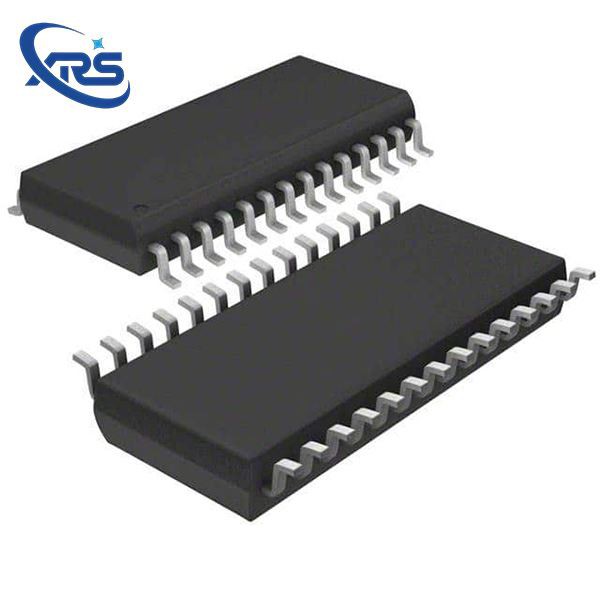
For example, in a typical audio system, a decoupling capacitor is often placed between the power supply pins of the Volume Control IC and ground. This capacitor helps to reduce the high-frequency noise that can be introduced by the power supply. Additionally, a voltage regulator may be used to ensure a stable and regulated power supply voltage.
Input and Output Filtering
External components are also commonly used for input and output filtering. Input filters can help to remove unwanted noise and interference from the audio signal before it enters the Volume Control IC. Output filters, on the other hand, can be used to shape the frequency response of the audio signal and remove any unwanted high-frequency components.

A common type of input filter is a low-pass filter, which allows low-frequency audio signals to pass through while attenuating high-frequency noise. Output filters can include a combination of low-pass and high-pass filters to achieve the desired frequency response. These filters are typically implemented using resistors, capacitors, and inductors.
Gain Setting
In some cases, external components may be required to set the gain of the Volume Control IC. The gain determines how much the audio signal is amplified or attenuated. By using external resistors, the gain can be adjusted to meet the specific requirements of the audio system.
For example, in a simple audio amplifier circuit, a feedback resistor can be used to set the gain of the amplifier. By changing the value of this resistor, the gain can be increased or decreased. This allows for fine-tuning of the audio system's performance.
Examples of Volume Control ICs and Their External Component Requirements
Let's take a look at some specific examples of Volume Control ICs and their external component requirements.
LM3886TF
The LM3886TF is a popular audio power amplifier IC that can also be used for volume control in some applications. This IC requires several external components for proper operation.

For power supply, it needs a decoupling capacitor on the power supply pins to reduce noise. Additionally, input and output coupling capacitors are required to block DC components and allow only the audio signal to pass through. Resistors are also used to set the gain and bias of the amplifier.
Volume Control IC
Our Volume Control IC is designed to provide precise volume control in audio systems. Depending on the specific application, it may require external components for power supply filtering, input/output coupling, and gain setting.
In some cases, additional external components such as potentiometers may be used to provide a manual volume control interface. These potentiometers can be connected to the Volume Control IC to adjust the volume level.
IC Line Driver
The IC Line Driver is another type of audio IC that may be used in conjunction with a Volume Control IC. It is designed to drive audio signals over long distances or to provide a buffer between different stages of an audio system.
Similar to other audio ICs, the IC Line Driver may require external components for power supply filtering, input/output coupling, and impedance matching. These components help to ensure that the audio signal is transmitted accurately and without distortion.
Advantages of Using External Components
While the use of external components adds some complexity to the design, it also offers several advantages.
Customization
External components allow for greater customization of the audio system. By selecting the appropriate values of resistors, capacitors, and inductors, the designer can fine-tune the frequency response, gain, and other performance parameters of the system to meet specific requirements.
Improved Performance
External components can help to improve the overall performance of the audio system. For example, high-quality capacitors can reduce noise and improve the signal-to-noise ratio, while carefully selected resistors can ensure accurate gain setting and stable operation.
Compatibility
Using external components can also improve the compatibility of the Volume Control IC with other components in the audio system. For example, input and output coupling capacitors can help to match the impedance of different stages of the system, reducing signal reflections and improving the overall audio quality.
Conclusion
In conclusion, whether Volume Control ICs require external components depends on the specific application and the desired performance of the audio system. While some Volume Control ICs may be able to operate with minimal external components, in most cases, external components are necessary for power supply filtering, input/output coupling, gain setting, and other functions.
As a supplier of Volume Control ICs, we understand the importance of providing our customers with the necessary information and support to design and implement high-quality audio systems. If you have any questions or need assistance with your audio system design, please feel free to contact us for procurement and further discussions. We are committed to helping you find the best solutions for your specific needs.
References
- Horowitz, P., & Hill, W. (1989). The Art of Electronics. Cambridge University Press.
- Self, D. (2009). Small Signal Audio Design. Newnes.


