
What is the power - saving mode of an IC Line Driver?
Leave a message

As a supplier of IC Line Drivers, I'm often asked about the power - saving mode of these crucial components. In this blog, I'll delve into what the power - saving mode of an IC Line Driver is, its significance, how it works, and its benefits.
What is an IC Line Driver?
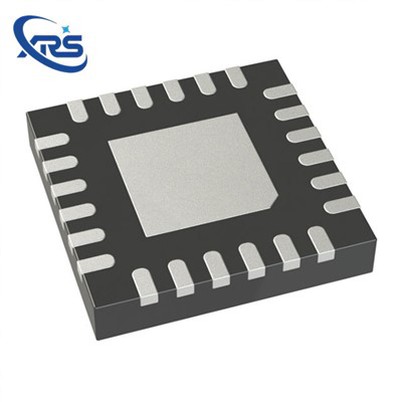
Before we jump into the power - saving mode, let's briefly understand what an IC Line Driver is. An IC Line Driver is an integrated circuit designed to drive signals over long lines. It takes an input signal, amplifies it, and then outputs it to a transmission line, ensuring that the signal can travel a significant distance without significant degradation. These drivers are widely used in various applications such as audio systems, telecommunications, and industrial control systems.

Understanding the Power - Saving Mode
The power - saving mode of an IC Line Driver is a feature that allows the device to consume less power under certain conditions. In normal operation, an IC Line Driver needs to continuously amplify and transmit signals, which consumes a certain amount of electrical power. However, there are times when the full - power operation is not necessary. For example, in a standby state or when the signal level is very low, the driver can enter the power - saving mode.
When in power - saving mode, the driver reduces its power consumption by adjusting its internal circuitry. This can involve reducing the bias current, lowering the operating voltage, or shutting down some non - essential sub - circuits. The exact mechanism depends on the specific design of the IC Line Driver.

Significance of Power - Saving Mode
In today's world, energy efficiency is a top priority. With the increasing demand for electronic devices and the growing concern about environmental impact, reducing power consumption has become crucial. For IC Line Drivers, the power - saving mode offers several important benefits.
Firstly, it helps to extend the battery life of portable devices. Many modern audio and communication devices are battery - powered, such as smartphones, tablets, and wireless headphones. By enabling the power - saving mode of the IC Line Driver, these devices can operate for a longer time on a single charge. This is especially important for users who are constantly on the go and rely on their devices throughout the day.
Secondly, power - saving mode reduces heat generation. Excessive power consumption can lead to increased heat production in the IC Line Driver. High temperatures can not only affect the performance and reliability of the driver but also pose a risk to other components in the system. By reducing power consumption, the power - saving mode helps to keep the temperature of the driver within a safe range, thereby improving the overall stability of the system.
Finally, from an economic perspective, power - saving mode can lead to cost savings. For large - scale industrial applications or data centers, where numerous IC Line Drivers are used, even a small reduction in power consumption per driver can result in significant savings over time.
How Power - Saving Mode Works
The operation of the power - saving mode in an IC Line Driver typically involves a combination of hardware and software control.
On the hardware side, the driver is designed with specific circuits that can adjust the power consumption. For example, some drivers use a low - power bias circuit that can be activated when the power - saving mode is enabled. This bias circuit provides just enough current to keep the essential parts of the driver functional while minimizing power consumption.
In addition, the driver may have a voltage regulator that can adjust the operating voltage according to the mode of operation. When in power - saving mode, the voltage regulator reduces the supply voltage to the driver, which in turn reduces the power consumption.
On the software side, the power - saving mode can be controlled by the system's microcontroller or firmware. The microcontroller can monitor the system's operating conditions, such as the signal level, the device's state (standby or active), and the battery level. Based on these conditions, it can send a control signal to the IC Line Driver to enable or disable the power - saving mode.
Benefits of Our IC Line Drivers with Power - Saving Mode
As a supplier of IC Line Drivers, we take pride in offering products with advanced power - saving features. Our drivers are designed to provide high - performance signal amplification while minimizing power consumption.
One of the key advantages of our products is their flexibility. Our IC Line Drivers can be configured to enter the power - saving mode under different conditions, allowing system designers to optimize the power consumption according to their specific requirements. Whether it's a battery - powered portable device or a large - scale industrial system, our drivers can adapt to the needs of the application.
In addition, our drivers are built with high - quality components and advanced manufacturing processes, ensuring reliable performance even in power - saving mode. We understand that in critical applications, such as telecommunications and industrial control, any signal degradation or system failure can have serious consequences. That's why we have rigorously tested our drivers to ensure that they maintain excellent signal quality and stability in all operating modes.
Related Products
If you're interested in other related IC products, we also offer a wide range of Operational Amplifier Ics. These operational amplifiers are essential components in many audio and electronic systems, providing high - gain signal amplification and precise control. One of our popular products is the OPA2277UA, which offers excellent performance and low noise characteristics.
Another related product is our Volume Control IC. This IC allows for precise control of the audio volume in various applications, from consumer audio devices to professional audio systems.
Contact Us for Procurement
If you're looking for high - quality IC Line Drivers with advanced power - saving features, we're here to help. Our team of experts can provide you with detailed technical support and guidance to ensure that you choose the right product for your application. Whether you're a small - scale manufacturer or a large - scale enterprise, we can meet your procurement needs.
We invite you to contact us to start a procurement discussion. We're committed to providing you with the best products and services at competitive prices.
References
- Horowitz, P., & Hill, W. (1989). The Art of Electronics. Cambridge University Press.
- Razavi, B. (2001). Design of Analog CMOS Integrated Circuits. McGraw - Hill.
- Gray, P. R., Hurst, P. J., Lewis, S. H., & Meyer, R. G. (2001). Analysis and Design of Analog Integrated Circuits. Wiley.