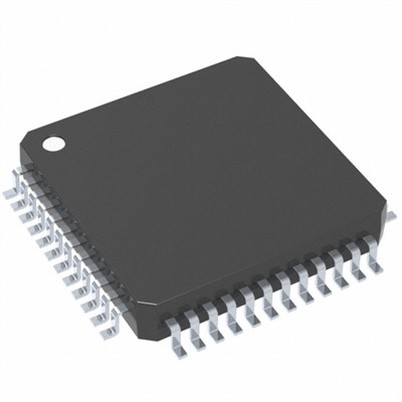

What are the grounding requirements for a Clock Buffer IC?
Leave a message

Grounding is a fundamental aspect of electronic circuit design, playing a crucial role in ensuring the proper functioning and reliability of integrated circuits (ICs). As a supplier of Clock Buffer IC, understanding the grounding requirements for these devices is essential for optimizing their performance and meeting the needs of our customers. In this blog post, we will explore the key grounding considerations for Clock Buffer ICs, including the importance of grounding, grounding techniques, and common grounding issues.
Importance of Grounding for Clock Buffer ICs
Clock Buffer ICs are designed to distribute clock signals with low skew and high drive capability. These devices are commonly used in a wide range of applications, including telecommunications, data centers, and consumer electronics. Proper grounding is essential for maintaining the integrity of the clock signals and minimizing electromagnetic interference (EMI).
One of the primary functions of grounding is to provide a reference voltage for the IC. The ground plane serves as a stable reference point for all electrical signals within the circuit, ensuring that the clock signals are accurately transmitted and received. Without a proper ground connection, the clock signals may experience fluctuations in voltage, leading to timing errors and signal degradation.


In addition to providing a reference voltage, grounding also helps to reduce EMI. EMI can be caused by a variety of sources, including power supply noise, high-speed switching signals, and external electromagnetic fields. By providing a low-impedance path for the return current, grounding helps to minimize the radiation of electromagnetic energy and prevent interference with other components in the circuit.
Grounding Techniques for Clock Buffer ICs
There are several grounding techniques that can be used to ensure the proper grounding of Clock Buffer ICs. The choice of grounding technique depends on the specific requirements of the application and the layout of the printed circuit board (PCB).
Single-Point Grounding
Single-point grounding is a common grounding technique used in electronic circuits. In this technique, all ground connections are connected to a single point on the PCB, typically a large ground plane. This helps to minimize the ground loop and reduce the risk of EMI.
To implement single-point grounding for a Clock Buffer IC, the ground pins of the IC should be connected directly to the ground plane using short, wide traces. The power supply pins should also be connected to the ground plane through a decoupling capacitor to filter out any high-frequency noise.
Multi-Layer PCB Grounding
Multi-layer PCBs are commonly used in high-speed electronic circuits to provide better signal integrity and reduce EMI. In a multi-layer PCB, the ground plane is typically located on one of the inner layers, providing a low-impedance path for the return current.
To ensure proper grounding of a Clock Buffer IC on a multi-layer PCB, the ground pins of the IC should be connected to the ground plane using vias. Vias are small holes in the PCB that are used to connect different layers. It is important to use multiple vias to reduce the impedance of the ground connection and minimize the risk of EMI.
Ground Isolation
In some applications, it may be necessary to isolate the ground of the Clock Buffer IC from the rest of the circuit to prevent ground loops and reduce EMI. This can be achieved using a ground isolation transformer or a optocoupler.
A ground isolation transformer is a device that uses a magnetic field to transfer electrical energy between two circuits without a direct electrical connection. This helps to isolate the ground of the Clock Buffer IC from the rest of the circuit and prevent ground loops.
An optocoupler is a device that uses an LED and a photodetector to transfer electrical signals between two circuits without a direct electrical connection. This helps to isolate the ground of the Clock Buffer IC from the rest of the circuit and reduce EMI.
Common Grounding Issues for Clock Buffer ICs
Despite the importance of grounding, there are several common grounding issues that can affect the performance of Clock Buffer ICs. These issues include ground loops, ground bounce, and EMI.
Ground Loops
Ground loops occur when there are multiple paths for the return current to flow between two points in the circuit. This can cause a voltage difference between the two points, leading to noise and interference in the clock signals.
To prevent ground loops, it is important to use a single-point grounding technique and ensure that all ground connections are made to a single point on the PCB. It is also important to avoid using long, thin traces for the ground connections, as these can increase the impedance of the ground path and contribute to ground loops.
Ground Bounce
Ground bounce is a phenomenon that occurs when the ground potential of an IC changes rapidly due to the switching of high-speed signals. This can cause a voltage spike on the ground pin of the IC, leading to noise and interference in the clock signals.
To prevent ground bounce, it is important to use a decoupling capacitor between the power supply and the ground pins of the IC. The decoupling capacitor helps to filter out any high-frequency noise and stabilize the ground potential of the IC.
EMI
EMI is a common problem in electronic circuits, especially in high-speed applications. EMI can be caused by a variety of sources, including power supply noise, high-speed switching signals, and external electromagnetic fields.
To reduce EMI, it is important to use proper grounding techniques and shield the Clock Buffer IC from external electromagnetic fields. This can be achieved using a metal shield or a ferrite bead.
Conclusion
Proper grounding is essential for ensuring the proper functioning and reliability of Clock Buffer ICs. By understanding the importance of grounding, using the appropriate grounding techniques, and addressing common grounding issues, we can optimize the performance of these devices and meet the needs of our customers.
As a supplier of Clock Buffer IC, we are committed to providing our customers with high-quality products and technical support. If you have any questions or need further information about the grounding requirements for Clock Buffer ICs, please feel free to contact us. We look forward to working with you to meet your timing needs.
References
- "High-Speed Digital Design: A Handbook of Black Magic" by Howard W. Johnson and Martin Graham
- "Printed Circuit Board Design Techniques for EMC Compliance: A Handbook for Designers" by Henry W. Ott
- "Electromagnetic Compatibility Engineering" by Henry W. Ott