
How to interface an analog Audio IC with a digital circuit?
Leave a message

Interfacing an analog audio integrated circuit (IC) with a digital circuit is a crucial process in modern audio systems, enabling seamless communication between analog and digital components. As an audio IC supplier, I understand the challenges and opportunities associated with this process. In this blog post, I will share some insights on how to interface an analog audio IC with a digital circuit effectively.


Understanding the Basics
Before delving into the interfacing process, it is essential to understand the fundamental differences between analog and digital signals. Analog signals are continuous and vary in amplitude and frequency, representing real - world audio signals accurately. Digital signals, on the other hand, are discrete and consist of a series of binary values (0s and 1s).
Analog audio ICs are designed to process analog audio signals, such as amplifying, filtering, or mixing them. Digital circuits, including microcontrollers, digital signal processors (DSPs), and field - programmable gate arrays (FPGAs), are used for tasks like audio encoding, decoding, and advanced signal processing.
Selecting the Right Analog Audio IC
The first step in interfacing an analog audio IC with a digital circuit is to choose the appropriate analog audio IC for your application. There are various types of analog audio ICs available in the market, each with its own set of features and specifications.
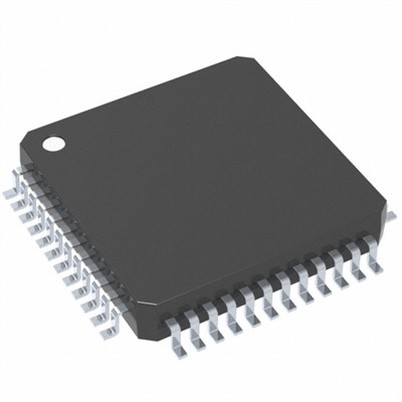
For example, the LM324DR is a popular quad operational amplifier IC that can be used for audio signal amplification and filtering. It has a wide supply voltage range and low power consumption, making it suitable for a variety of audio applications. Another option is the TAS5707PHPR, which is a high - performance audio amplifier IC with advanced features like integrated digital - to - analog converters (DACs) and built - in protection circuits.
When selecting an analog audio IC, consider factors such as the required audio quality, power consumption, input and output impedance, and the number of channels.
Converting Analog Signals to Digital Signals
To interface an analog audio IC with a digital circuit, the analog audio signals need to be converted into digital signals. This is typically done using an analog - to - digital converter (ADC). An ADC samples the analog audio signal at regular intervals and converts it into a digital representation.
The sampling rate and the resolution of the ADC are two critical parameters. The sampling rate determines how often the analog signal is sampled, and according to the Nyquist - Shannon sampling theorem, the sampling rate should be at least twice the highest frequency component of the audio signal. The resolution of the ADC determines the number of bits used to represent each sample, which affects the dynamic range and the accuracy of the digital representation.
Converting Digital Signals to Analog Signals
After the digital circuit has processed the audio data, the digital signals need to be converted back into analog signals. This is achieved using a digital - to - analog converter (DAC). A DAC takes the digital audio data and reconstructs it into an analog audio signal.
Similar to ADCs, the performance of a DAC is determined by its resolution and sampling rate. Higher - resolution DACs can provide better audio quality with a wider dynamic range.
Signal Conditioning
Before connecting the analog audio IC to the ADC or the DAC to the output, signal conditioning may be required. Signal conditioning includes tasks such as amplification, filtering, and impedance matching.
Amplification is used to increase the amplitude of the audio signal to a level suitable for the ADC or the output device. Filtering is used to remove unwanted noise and interference from the audio signal. Impedance matching is important to ensure maximum power transfer between the different components and to prevent signal reflection.
Communication Protocols
Once the analog signals have been converted to digital signals and vice versa, the digital circuit needs to communicate with other components in the system. There are several communication protocols commonly used in audio systems, such as I2S (Inter - IC Sound), SPI (Serial Peripheral Interface), and USB (Universal Serial Bus).
I2S is a popular protocol for transmitting digital audio data between audio ICs. It provides a simple and efficient way to transfer audio samples in a synchronous manner. SPI is a more general - purpose serial communication protocol that can also be used for audio applications, especially when additional control signals need to be transmitted. USB is a widely used interface for connecting audio devices to computers and other digital systems, offering high - speed data transfer and plug - and - play functionality.
Design Considerations
When designing the interface between an analog audio IC and a digital circuit, there are several important considerations:
- Power Supply: Ensure that the power supply for both the analog audio IC and the digital circuit is stable and clean. Power supply noise can introduce unwanted artifacts into the audio signal.
- Grounding: Proper grounding is crucial to minimize electromagnetic interference (EMI) and to ensure the stability of the audio signal. Separate analog and digital grounds are often used to prevent cross - talk between the analog and digital circuits.
- Layout: The physical layout of the printed circuit board (PCB) can have a significant impact on the performance of the audio system. Keep the signal traces short and away from high - speed digital signals to reduce noise coupling.
Troubleshooting
Even with careful design, issues may arise during the interfacing process. Common problems include noise in the audio signal, distortion, and communication errors.
To troubleshoot these issues, start by checking the power supply and grounding. Ensure that all connections are secure and that there are no loose wires. Use an oscilloscope and a spectrum analyzer to analyze the audio signals and identify any abnormal waveforms or frequencies.
Conclusion
Interfacing an analog audio IC with a digital circuit is a complex but rewarding process. By understanding the basics of analog and digital signals, selecting the right components, and following proper design and troubleshooting techniques, you can achieve a high - quality audio system.
As an audio IC supplier, we offer a wide range of products, including the LM324DR, TAS5707PHPR, and Audio Transceiver, to meet your audio application needs. If you are interested in our products or have any questions about interfacing analog audio ICs with digital circuits, please feel free to contact us for procurement and further discussions.
References
- Horowitz, P., & Hill, W. (1989). The Art of Electronics. Cambridge University Press.
- Oppenheim, A. V., & Schafer, R. W. (1999). Discrete - Time Signal Processing. Prentice Hall.
- Razavi, B. (2001). Design of Analog CMOS Integrated Circuits. McGraw - Hill.