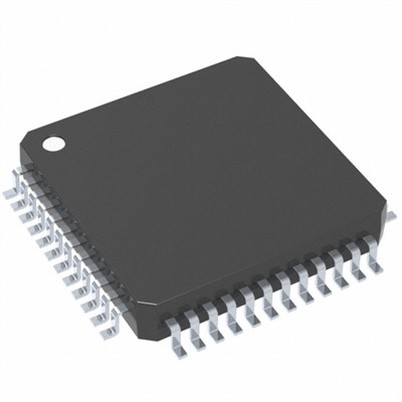

Can op amp lm358p be used in high - frequency circuits?
Leave a message

Hey there! As a supplier of the op amp LM358P, I often get asked if this little guy can be used in high - frequency circuits. Well, let's dig into it and find out.
First off, let's understand what the LM358P is all about. It's a dual operational amplifier, which means it's got two op - amps in one package. It's pretty popular because it's cheap, easy to use, and has a wide range of applications. You can find it in things like power supplies, signal conditioning, and audio amplifiers.
Now, when we talk about high - frequency circuits, we're usually looking at frequencies in the range of hundreds of kilohertz to several megahertz or even higher. And here's the deal with the LM358P: it's not really built for high - frequency work.
The LM358P has a relatively low gain - bandwidth product (GBP). The gain - bandwidth product is a key spec for op - amps. It tells you the maximum frequency at which the op - amp can provide a certain gain. For the LM358P, the typical gain - bandwidth product is around 1 MHz. That means if you want a gain of 10, the maximum frequency you can use is about 100 kHz (since gain x frequency = GBP). If you try to go beyond that, the gain will start to roll off, and your signal will get distorted.
Another factor is the slew rate. The slew rate is how fast the output voltage of the op - amp can change. In high - frequency circuits, you often need the output to change rapidly to keep up with the input signal. The LM358P has a relatively slow slew rate, typically around 0.3 V/μs. This can cause problems in high - frequency applications because it can't respond quickly enough to fast - changing signals.
So, does that mean you can never use the LM358P in high - frequency circuits? Not exactly. There are some situations where you might be able to get away with it.


For example, if you only need a very small gain (like a gain of 1 or 2), the LM358P can handle relatively higher frequencies. Let's say you're using it as a voltage follower (a circuit where the output voltage follows the input voltage, so the gain is 1). In this case, you can use frequencies closer to the gain - bandwidth product, which means you can go up to around 1 MHz.
Also, if your high - frequency signal has a relatively low amplitude, the LM358P might work. Since the slew rate is less of an issue with small - amplitude signals, the op - amp can handle the signal without too much distortion.
But if you need high gain and high - frequency performance, you're better off looking at other op - amps. For instance, the OPA2277UA is a great choice for high - frequency applications. It has a much higher gain - bandwidth product (around 10 MHz) and a faster slew rate (around 6 V/μs). This means it can handle higher frequencies and larger signal swings without distorting the output.
Another option is the LM324DR. It's a quad operational amplifier, similar to the LM358P but with some differences in performance. While it's also not a high - frequency specialist, it has a slightly higher gain - bandwidth product than the LM358P, around 1.2 MHz, which might give you a bit more flexibility in some applications.
If you're just starting out with op - amps and want to explore different options, there are plenty of Operational Amplifier Ics available on the market. You can choose the one that best suits your specific requirements in terms of frequency, gain, and other parameters.
Now, as a supplier of the LM358P, I know that sometimes cost is a big factor. The LM358P is very affordable, which makes it a great choice for low - cost projects where high - frequency performance isn't critical. If you're working on a hobby project or a low - budget application, the LM358P can still be a valuable component.
But if you're in a situation where high - frequency performance is a must, I'd recommend considering other op - amps. However, if you're still not sure whether the LM358P is right for your project, feel free to reach out. I'm here to help you make the best decision for your needs. Whether you need more information about the LM358P or want to discuss other op - amp options, I'm just a message away. Let's have a chat and figure out the best solution for your circuit design.
If you're interested in purchasing the LM358P or want to start a procurement discussion, don't hesitate to get in touch. I can provide you with competitive prices, reliable delivery, and excellent customer service. Let's work together to make your project a success.
References:
- Texas Instruments LM358 datasheet
- Analog Devices application notes on operational amplifiers
- Various electronics textbooks on op - amp theory and applications