

How to adjust the gain of a circuit using ic lm324 original?
Leave a message

Hey there! As a supplier of the original IC LM324, I've had my fair share of experiences with folks trying to figure out how to adjust the gain of a circuit using this little wonder. So, I thought I'd share some insights and tips on this topic.
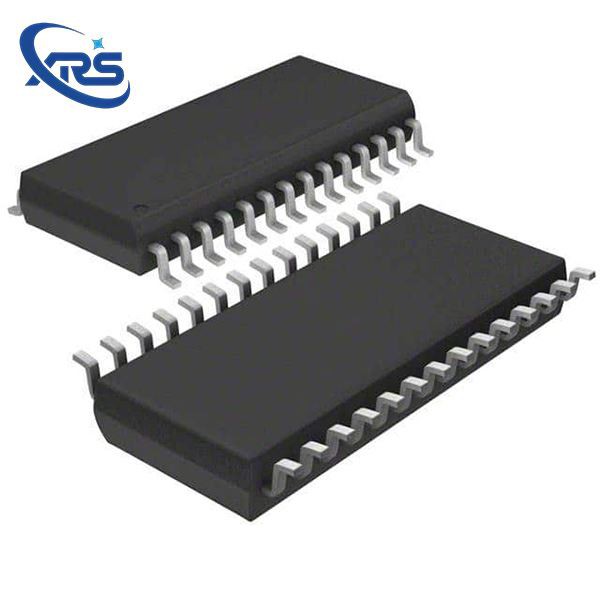
First off, let's talk a bit about what the LM324 is. The LM324 is a quad operational amplifier, which means it's got four op - amps in one single package. It's widely used in various applications like audio amplifiers, signal conditioning, and many more. One of the key things you might want to do with a circuit using the LM324 is to adjust its gain.
Understanding Gain in a Circuit
Gain is basically a measure of how much an amplifier can increase the amplitude of an input signal. In simple terms, if you have a small input signal and you want a bigger output signal, you need to adjust the gain. There are two main types of gain we usually talk about: voltage gain and power gain. For most basic circuits using the LM324, we're mainly concerned with voltage gain.
The formula for the voltage gain ($A_v$) of an inverting amplifier circuit using an op - amp is $A_v=-\frac{R_f}{R_i}$, where $R_f$ is the feedback resistor and $R_i$ is the input resistor. For a non - inverting amplifier, the formula is $A_v = 1+\frac{R_f}{R_i}$.
Adjusting Gain in an Inverting Amplifier Circuit with LM324
Let's start with the inverting amplifier. In an inverting amplifier circuit using the LM324, the input signal is applied to the inverting input terminal. To adjust the gain, you simply change the values of the feedback resistor ($R_f$) and the input resistor ($R_i$).
If you want to increase the gain, you can either increase the value of $R_f$ or decrease the value of $R_i$. For example, if you initially have $R_f = 10k\Omega$ and $R_i=1k\Omega$, the gain $A_v=-\frac{10k\Omega}{1k\Omega}=- 10$. If you increase $R_f$ to $20k\Omega$, the gain becomes $A_v =-\frac{20k\Omega}{1k\Omega}=-20$.
When you're working on adjusting these resistors, it's important to keep in mind the power ratings of the resistors. If the gain is too high, the output signal might saturate, which means it reaches the maximum or minimum voltage that the op - amp can output. You can check out the datasheet of the LM324 to find out the maximum and minimum output voltage values.
Adjusting Gain in a Non - Inverting Amplifier Circuit with LM324
In a non - inverting amplifier circuit, the input signal is applied to the non - inverting input terminal. As I mentioned earlier, the gain formula is $A_v = 1+\frac{R_f}{R_i}$.
Let's say you have $R_f = 5k\Omega$ and $R_i = 1k\Omega$. The gain $A_v=1+\frac{5k\Omega}{1k\Omega}=6$. If you want to increase the gain, you can increase $R_f$ or decrease $R_i$. For instance, if you increase $R_f$ to $10k\Omega$, the gain becomes $A_v=1+\frac{10k\Omega}{1k\Omega}=11$.
Practical Considerations
When you're actually adjusting the gain of a circuit using the LM324, there are a few practical things to keep in mind. First, the frequency response of the op - amp can affect the gain. The LM324 has a certain bandwidth, and as the frequency of the input signal increases, the gain might start to decrease.
Also, the power supply voltage of the LM324 is crucial. If the power supply voltage is too low, the op - amp might not be able to provide the desired gain. Make sure you're using a stable power supply within the recommended range specified in the datasheet.
Another thing is the noise. Higher gain can amplify not only the desired signal but also any noise present in the circuit. You might need to add some filtering components to reduce the noise.
Other Related ICs and Applications
If you're working on audio - related projects, you might also be interested in some other ICs. For example, the Audio Transceiver can be used in audio communication systems. It allows for the transmission and reception of audio signals.
The IC Line Driver is useful when you need to drive a long cable or a load with a relatively high impedance. It can boost the signal strength and ensure that the signal is transmitted properly.
And if you're looking for a high - precision op - amp, the OPA2277UA is a great option. It has low noise and high gain accuracy, which can be beneficial in applications where precision is key.

Conclusion
Adjusting the gain of a circuit using the original IC LM324 is not as complicated as it might seem at first. By understanding the basic principles of inverting and non - inverting amplifier circuits and how to manipulate the resistor values, you can easily control the gain.
If you're in the market for the original IC LM324 or have any questions about adjusting the gain of circuits using it, feel free to reach out for a procurement discussion. I'm here to help you make the most of this versatile IC.
References
- LM324 Datasheet
- Operational Amplifiers and Linear Integrated Circuits: Theory and Application by Robert F. Coughlin and Frederick F. Driscoll


